
Svitlana Doe v. Noem — Humanitarian Parole Class Action
Svitlana Doe v. Noem — Humanitarian Parole Class Action
Additional languages: Haga clic aquí para español.
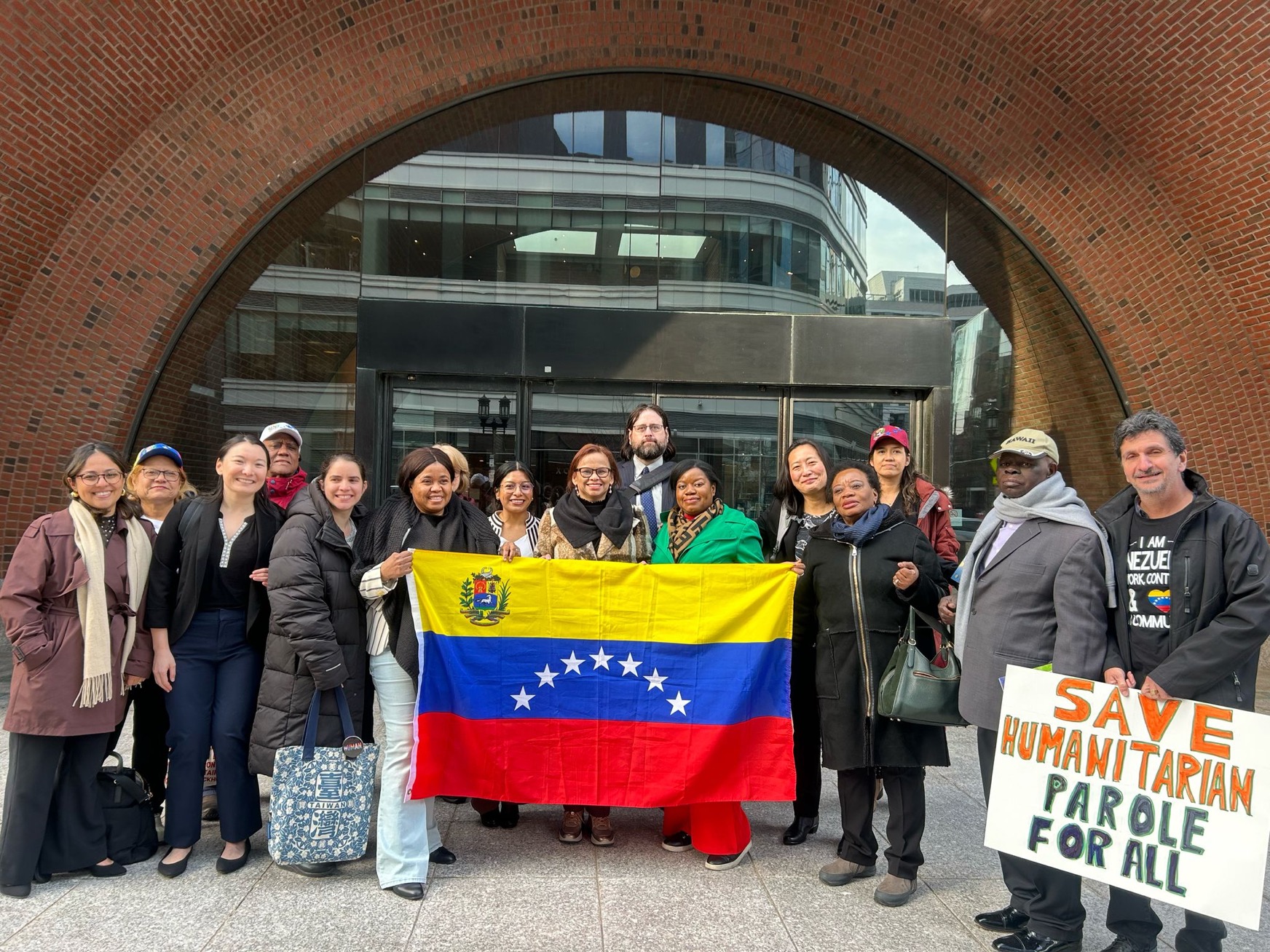
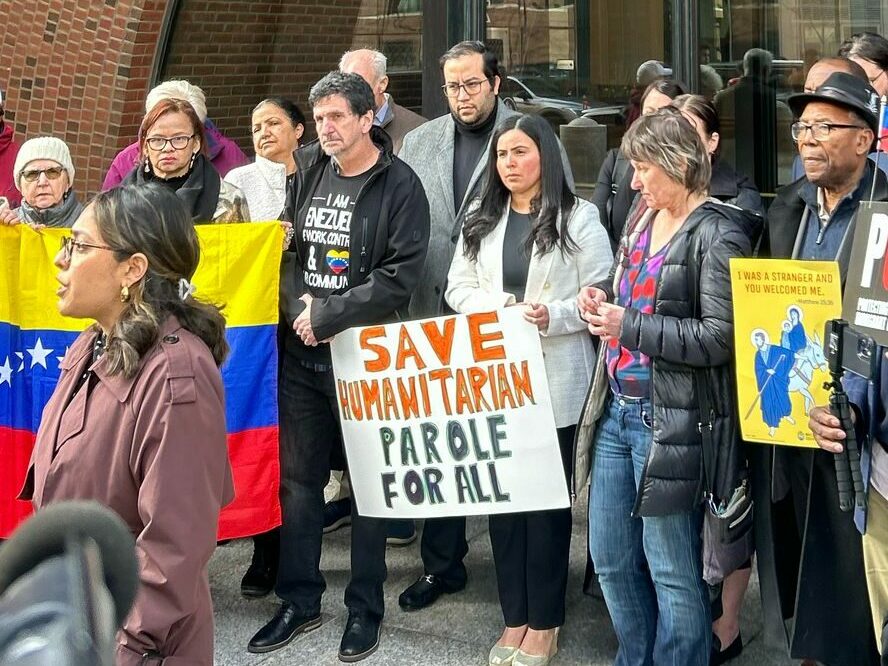
Justice Action Center (JAC) and Human Rights First (HRF) filed the lawsuit Svitlana Doe v. Noem on behalf of individual beneficiaries and sponsors of humanitarian parole processes–including the parole program for Cuba, Haiti, Nicaragua, and Venezuela (CHNV), Uniting for Ukraine (U4U), Operation Allies Welcome (OAW), Central American Minors parole (CAM), Family Reunification Parole (FRP), and military parole-in-place)–and on behalf of organizational plaintiff Haitian Bridge Alliance (HBA).
In the lawsuit, we are challenging the following actions taken by the Trump Administration:
- Pausing USCIS processing of all applications for parole and re-parole under these parole programs;
- Pausing the processing of requests for other immigration benefits submitted by or on behalf of parolees who came into the United States through these parole programs. This includes applications for asylum, TPS, certain visas, adjustment of status, and work authorization; and
- Ending the CHNV parole process and ending individual grants of CHNV parole as of April 24, 2025 (within 30 days of the Federal Register Notice published on March 25, 2025)
Class Member Questions
When a court certifies a class, any relief the court provides will apply to all class members, not just the named plaintiffs in the case. There are several certified classes in this case. As of January 10th, our class members include:
- CHNV beneficiaries whose parole is terminated by the March 25th FRN or with any other pending immigration benefits applications;
- Family Reunification Parole beneficiaries whose parole is terminated by the December 15th FRN or with any other pending immigration benefits applications;
- CAM, MPIP, OAW, and U4U beneficiaries with pending applications for re-parole or any other immigration benefit;
- MPIP sponsors with pending applications for a family member’s initial MPIP parole
Unfortunately, this does not apply to 1) beneficiaries (or sponsors of beneficiaries) who voluntarily left and remain outside the U.S., and 2) beneficiaries or sponsors who choose to opt out of the class to sue separately.
If you are a class member and have questions about our litigation, please let us know using the “Submit a Question” button below! If you are not a class member, please reach out to our team here or below.
Class Member 📧 Updates
Sign up for class member email updates for the latest updates from our legal team. Not sure if you’re a class member? Check out our FAQ!
Latest Updates
June 5, 2026 – A Rhode Island district court struck down four USCIS policies in Dorcas v. USCIS, including the December 2025 memo that froze the processing of immigration benefit applications by people from Afghanistan, Cuba, Haiti, and Venezuela. The ruling is effective immediately, meaning those policies are no longer in effect. The court’s order applies to anyone 1) with a pending asylum application or 2) from the four countries with any pending immigration benefit applications.
It is unclear how this order will be implemented or when USCIS will resume processing these applications. Visit Democracy Forward’s website to learn more and stay updated on the case’s legal developments.
February 3, 2026 – We filed a motion for Preliminary Injunction (PI) asking the court to block USCIS’s December 2nd suspension of processing and adjudicating specific pending immigration benefit applications filed by Afghan, Cuban, Haitian, and Venezuelan class members in this case while the litigation continues. The motion does not ask the court to address the asylum suspension that is also in the December 2nd memo and applies to all nationalities. We will share more information regarding what happens next with this motion when we receive it.
January 24, 2026 — Judge Talwani issued a Preliminary Injunction (PI)/stay, temporarily blocking the government’s termination of FRP grants of parole nationwide while the litigation continues. For FRP beneficiaries impacted by the December 15th Federal Register Notice, this means your FRP parole and related work authorization are valid through their original expiration dates until further notice.
Frequently Asked Questions:
Last updated: 1/20/2026
Recent Developments for CHNV Beneficiaries / Recent Developments for CAM, FRP, MPIP, OAW, and U4U Beneficiaries and Sponsors / Class Actions & Membership